



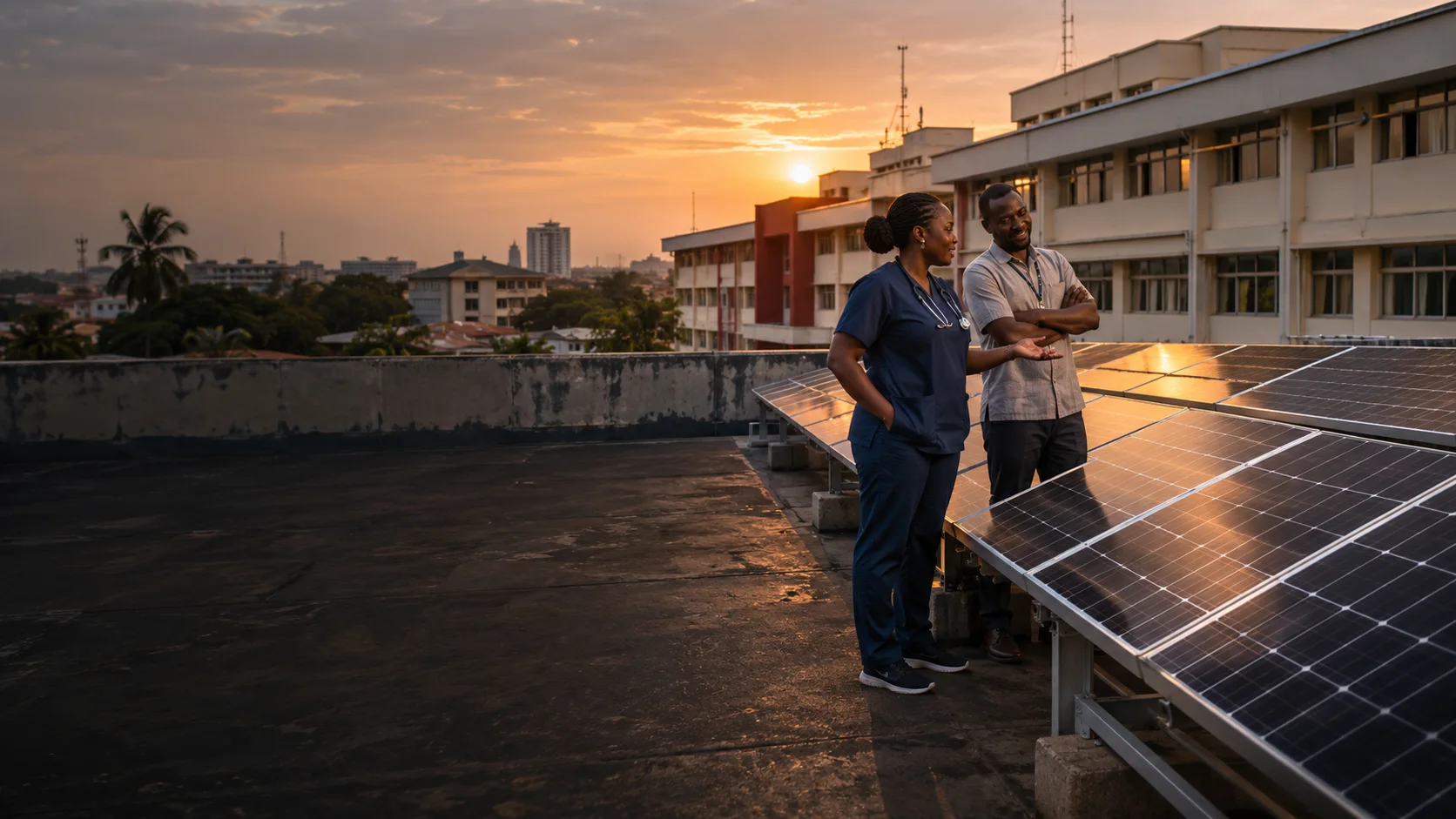



Pilot update. Solar panels are installed.

More affordable dialysis.
Powered by the sun.

At NephroHaven Foundation, we’re on a mission to develop a more affordable approach to kidney care, starting in Ghana.

One model.
Connected components.

Five parts work toward one goal: making kidney care more affordable and accessible.

Explore the pilot
  1. Solar energy

    Combine solar and grid electricity to test lower energy costs and more reliable treatment.

  2. Patient affordability

    Apply energy savings as subsidies and assess the effect on patient costs.

  3. Community access

    Support screening, referral, National Health Insurance Scheme registration, and follow-up care.

  4. Mental health integration

    Prepare to bring patient screening, support, and referral into dialysis care.

  5. Workforce development

    Prepare nurses and health professional students for compassionate kidney care, including mental health skills.

Kidney care beyond each session

Our programs address the cost of treatment, earlier detection, the support patients need, and the skills of the professionals caring for them.

From solar installation to patient impact

Trust Premium Hospital in Osu, Accra, is the starting point for testing how solar and grid electricity can support dialysis.

  1. Complete

    Solar installation

    Solar panels are installed at Trust Premium Hospital in Osu, Accra.

  2. Next

    Commissioning

    Bring the solar and grid system into operation and prepare to collect data.

  3. Planned

    Feasibility study

    Evaluate electricity costs, power-related treatment interruptions, and what patients pay after energy savings are applied as subsidies.

When dialysis is out of reach, lives are at risk.

For families in Ghana, accessing dialysis can mean long journeys, repeated bills, and difficult decisions about continuing treatment.

Read the 2022 assessment

Dialysis access in Ghana

7 of 16
regions had no dialysis services
1,195
people received haemodialysis nationwide
US$54
average cost of one dialysis session

2022 national data · Tannor et al., 2023

Built from frontline experience

Founder and President Bernard Abeiku Mensah saw families struggle to access dialysis while working as a community nurse at Cape Coast Teaching Hospital. He is pursuing a PhD in Nursing at Yale University.

Read Bernard’s story

Recognized at NurseHack4Health™

Our proposed solar-powered dialysis model received a Track 2 award at the 2025 Pitch-A-Thon.

Read the award announcement

Frequently asked questions

Read all FAQs
What is NephroHaven Foundation?

NephroHaven is a nonprofit working to expand access to sustainable kidney care through prevention, early detection, and solar-powered dialysis solutions.

What does solar-powered dialysis mean?

Our initial model combines solar energy with grid electricity. The feasibility study will assess electricity costs, power-related treatment interruptions, and patient affordability.

Have you demonstrated cost savings yet?

Solar panels are installed, and commissioning and data collection are the next steps. We will share results when they are available.

Does NephroHaven operate its own dialysis center?

Our first solar installation is at Trust Premium Hospital in Osu, Accra. A dedicated NephroHaven center is a future concept.

Can organizations outside Ghana partner with you?

Yes. We welcome local and international partners whose expertise or resources can advance the work in Ghana and help us develop the model for wider use.

Help us bring the model to more people.

We are seeking partners to grow patient access, launch support and training programs, and build evidence for future expansion.

Connect on LinkedIn

Follow the pilot

See what comes next